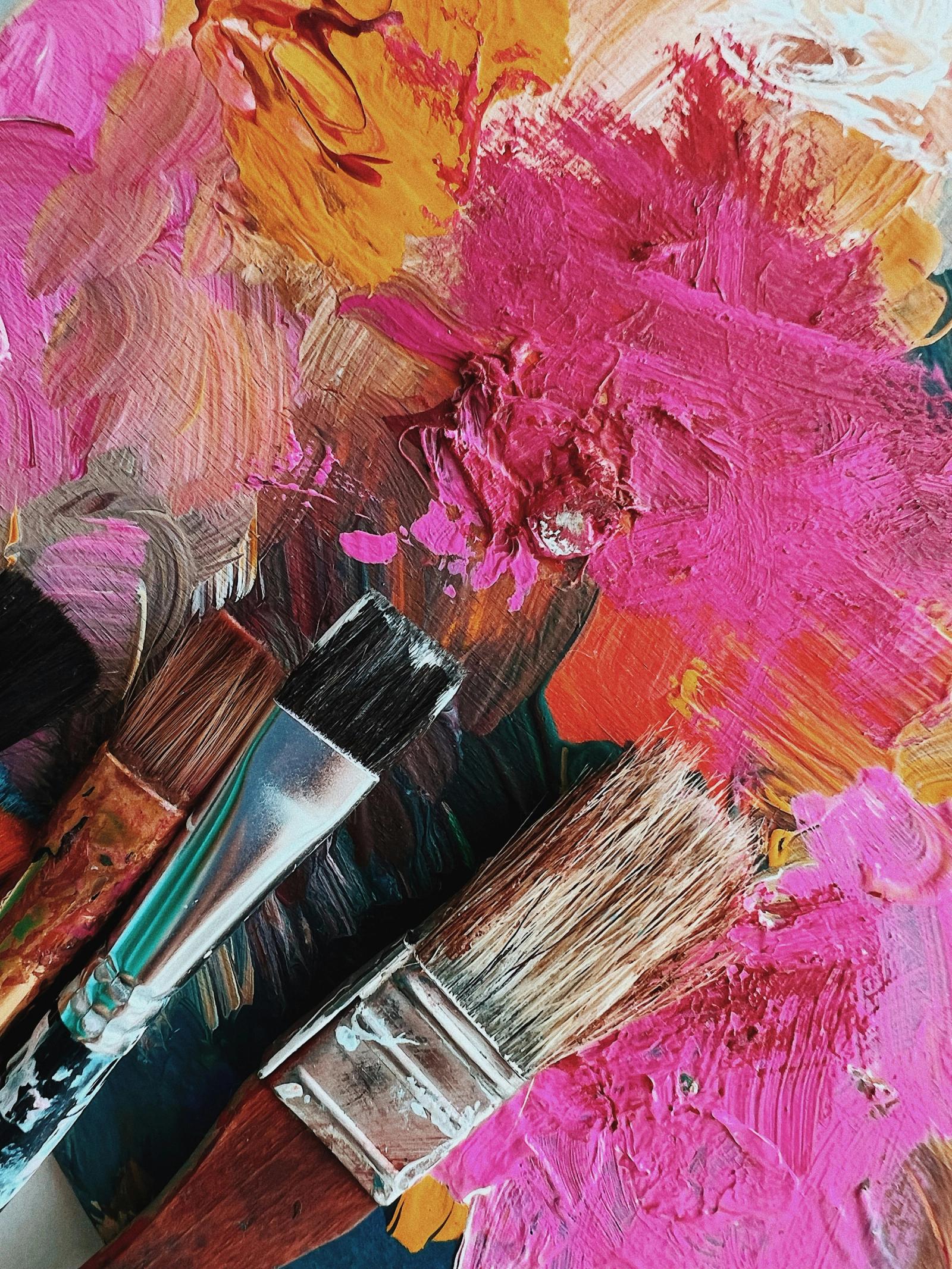
I keep a colour journal. Not a sketchbook, just colours.
Swatches of paint, fabric samples, photographs, screenshots, torn pages and fragments of things I wanted to remember. Sometimes I annotate them with a date or a word. Sometimes I leave them without explanation.
I started doing this because I noticed that colour often reaches me before language does. Before I have worked out exactly what I am feeling, I may already be drawn to a particular shade, combination or temperature.
Before I have the words, I often have the colour.
Some colours return repeatedly.
Ochre carries warmth for me. It can recall late afternoon light, earth, skin, interiors and the feeling of something familiar but slightly out of reach. Deep indigo can feel quieter and more inward. Other colours arrive differently depending on the work, the memory attached to them and the colours placed beside them.
These associations are personal, but they are never entirely private. Colour also carries cultural histories, inherited meanings and associations that shift between places and communities. A colour can signify one thing in one context and something very different in another.
This overlap interests me.
When I bring a colour into a painting, I am not only thinking about whether it is visually beautiful. I am thinking about what it carries, what it interrupts and what it changes around it.
A warm colour inside a cooler composition can change the emotional temperature of the whole image. A blue that feels calm beside one colour can become heavy or distant beside another. Pattern can make colour feel inherited, familiar or connected to a particular visual memory.
The viewer also brings their own associations.
This is part of what I value about painting. I can begin with one relationship to a colour, but I cannot control what another person remembers when they encounter it. The work becomes a meeting point between my visual language and theirs.
Over time, I have become less interested in using colour simply to decorate an image and more interested in allowing it to participate in the meaning of the work.
It can hold memory without illustrating it directly. It can suggest belonging without naming a place. It can carry something inherited, something remembered or something that has not yet become language.
For me, colour is not an addition at the end of the process.
Often, it is where the work begins.


